boldouterwear
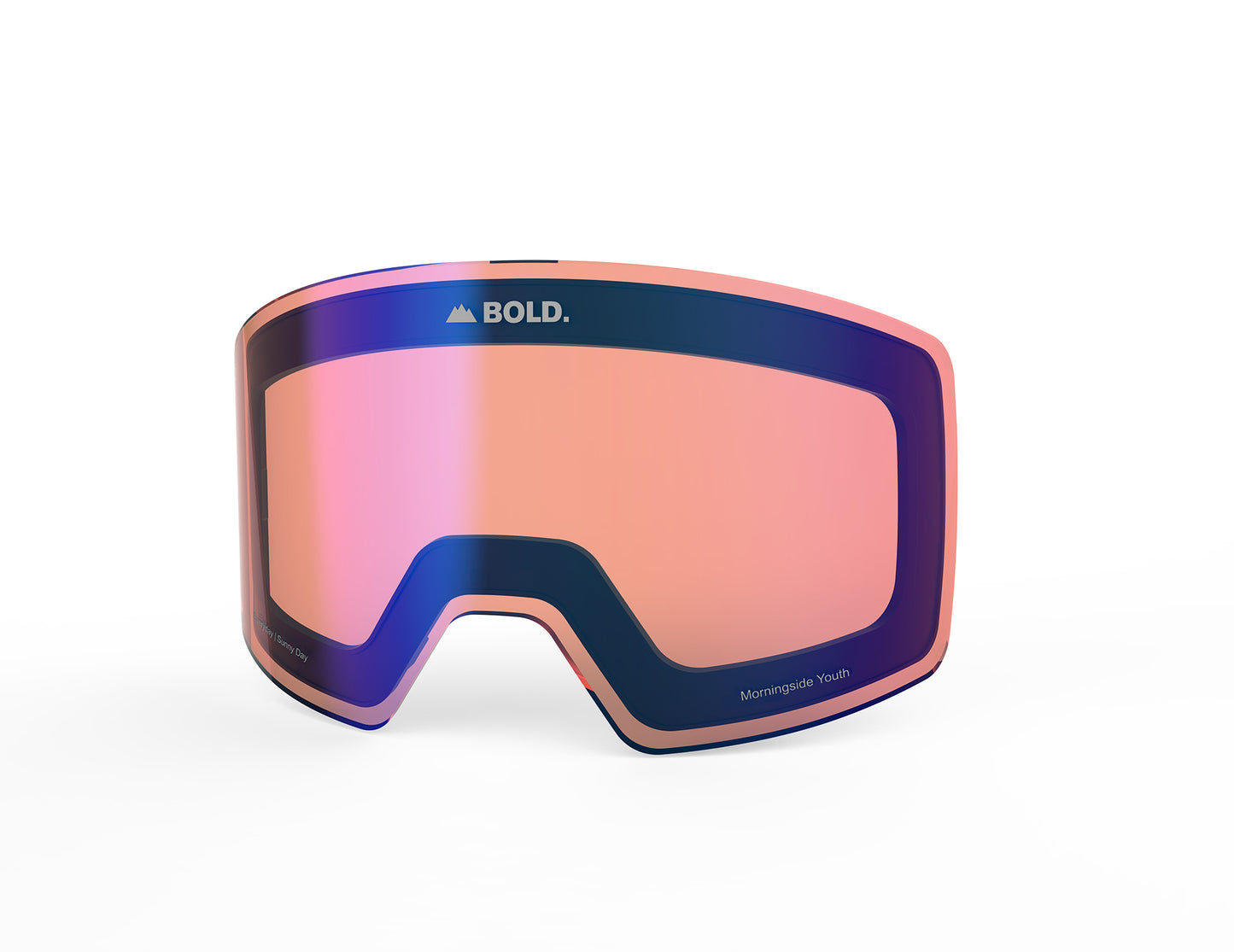
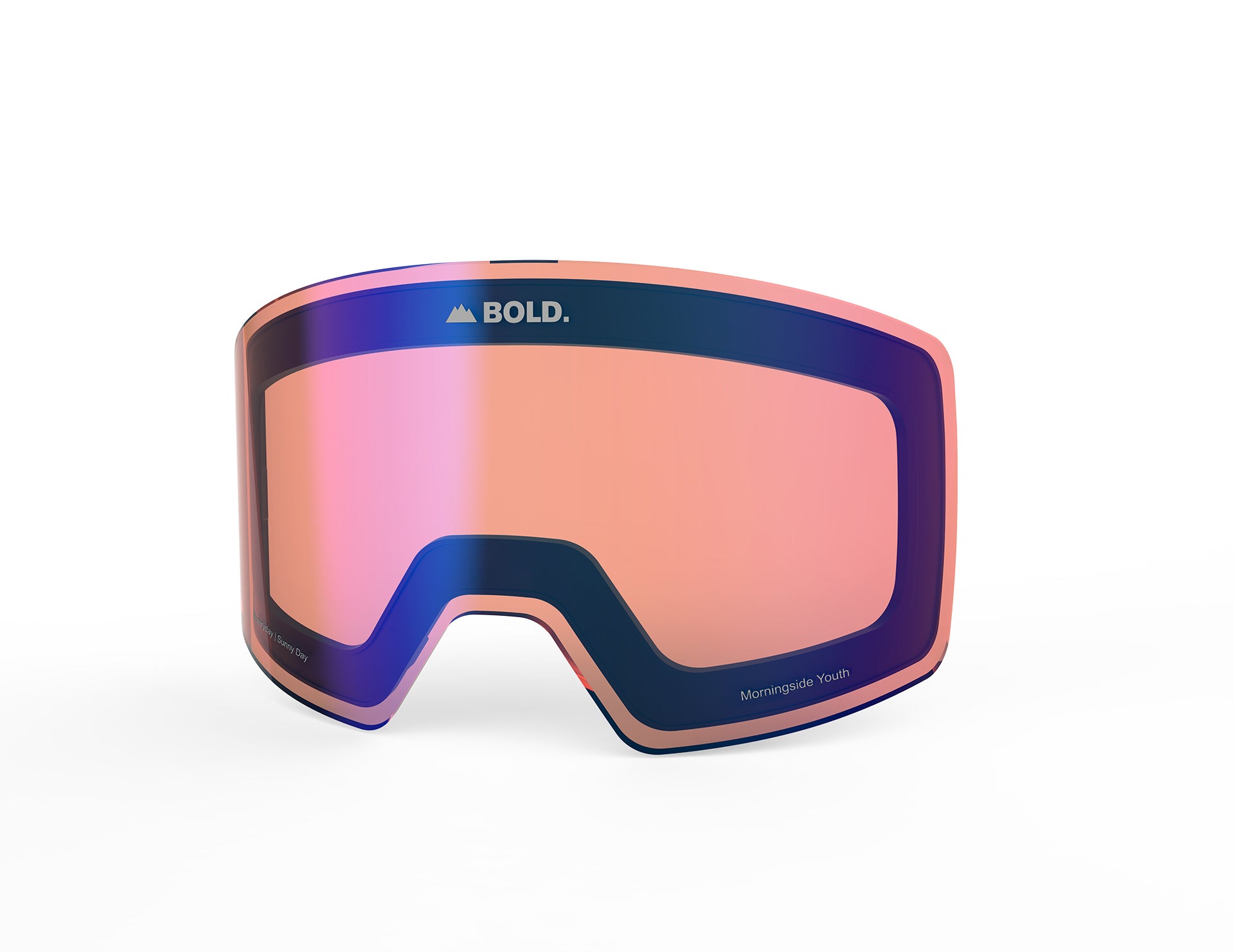
BOLD Morningside Youth Blue / Pink Ski Goggle Lens - Low Light
BOLD Morningside Youth Blue / Pink Ski Goggle Lens - Low Light
Couldn't load pickup availability
Youth Blue / Pink Ski Goggle Lens
Introducing the BOLD Morningside Blue / Pink ski goggle lens, the perfect choice for low light, flat light, and stormy days. Specifically designed to pair seamlessly with the Morningside Youth Goggle, this lens ensures superior visibility in challenging weather conditions.
With its fully magnetic design, this lens offers quick and hassle-free swaps, allowing young skiers to adapt to rapidly changing conditions on the slopes. Whether it’s cloudy, snowy, or overcast, the Blue / Pink lens enhances clarity and contrasts, making it the ideal companion for all types of low visibility conditions.
Elevate your skiing experience with this high-performance lens, offering optimal performance and a secure fit. Make the BOLD Morningside Blue / Pink lens a key part of your gear today!
Technical specifications
| Fits | Morningside Youth |
| Lens shape | Cylindrical |
| Lens construction | Dual layer |
| Contrast | POW viz+ high-contrast lens, sharpens terrain definition and depth perception |
| Anti-fog | Permanent anti-fog treatment |
| UV protection | UV400 |
| Lens material | Polycarbonate |
| Mounting | Magnetic quick-change |
Other lenses that fit this goggle
UV protection and certification
| UV protection | UV400 |
| Measured UV transmission | 0.00% UVA and UVB transmission |
| Tested to | UV400 EN ISO 12312-1:2022 AS/NZS 1067.1:2016+A1:2021 ANSI Z80.3-2018 |
| Impact resistance | Drop ball impact tested (FDA 21 CFR 886.4750) |
| FDA status | FDA Class I protective eyewear (21 CFR 886.4750) |
What UV400 actually means
UV400 means the lens blocks 100% of ultraviolet light up to 400 nanometres. That covers the whole UV range that reaches the ground, both UVA and UVB. Lab testing measured 0.00% transmission across it.
Why UVB matters. UVB is the shorter, higher energy wavelength. Your cornea absorbs almost all of it, which is why the damage shows up fast. A day on snow without protection can give you photokeratitis, which is sunburn of the cornea. It feels like grit in your eyes and usually arrives six to twelve hours after exposure, often in the middle of the night. Long term, UVB is associated with pterygium, a fleshy growth across the white of the eye that skiers and surfers get, and with skin cancer on the thin skin of the eyelids.
Why UVA matters. UVA is the longer wavelength and it does not stop at the cornea. It passes through to the lens inside your eye and on to the retina. You feel nothing at the time, which is the problem. The damage accumulates over decades and is linked to cataracts and to age related macular degeneration. UVA is also present all day, all year, and it passes through cloud, so overcast days are not safe days.
Why it matters more on snow and at altitude. Fresh snow reflects up to 80% of UV straight back at your face, so you take it from above and below. UV intensity also climbs roughly 10% for every 1,000 feet you gain. A bluebird day at 10,000 feet on snow is one of the harshest UV environments most people ever stand in.
One more thing worth knowing. A dark lens with no UV protection is worse for your eyes than none at all. The tint makes your pupils open wider, so more UV gets in. That is why the lab number matters and the tint does not tell you anything on its own.
What these standards mean
EN ISO 12312-1:2022. The international standard for sun filters. It sets the filter category, verifies UV performance, and confirms the lens behaves the way its category claims.
AS/NZS 1067.1:2016. The Australian and New Zealand standard, widely regarded as among the strictest in the world for sun protection. It is the one that measures UV blocking all the way out to 400 nanometres, which is where the UV400 claim comes from.
ANSI Z80.3-2018. The United States standard for non prescription eyewear. It checks UV blocking, that colours still look natural through the lens, and that you can correctly recognise red, amber and green signals.
FDA drop ball test. Every lens design is drop ball impact tested under the United States FDA framework for protective eyewear (21 CFR 886.4750). Impact resistant does not mean unbreakable, but the lens is built to resist shattering rather than breaking into fragments near your eyes. BOLD ski goggles are also listed with the FDA as Class I protective eyewear, and Class I means the simplest, lowest risk category of regulated eye protection. Listed is not the same as FDA approved, and we will never claim otherwise.