What ski goggle lens is best for flat light?
Low light and storm oriented lenses are usually best for flat light because they improve contrast and help terrain details stand out in cloudy or snowy conditions.
Are photochromic ski goggles worth it?
Photochromic goggles are worth it for riders who see changing conditions and want one setup that can adapt from lower light to brighter sun without carrying multiple lenses.
What is high contrast lens technology?
Our lenses use proprietary high contrast technology to filter out specific light wavelengths, creating incredible depth and definition in the snow. If you struggle with flat light where the terrain washes out and bumps sneak up on you, this technology brings the mountain back into focus. You normally only find this level of optical clarity in goggles priced in the $350 to $400 plus range, but it is standard in all BOLD goggles.
What does VLT mean for ski goggles?
VLT stands for Visible Light Transmission, which is the percentage of light the lens lets through. For stormy days, you want a higher VLT, like 55 percent, because it lets more light in and brightens up the low light conditions. For bright sunny days, a lower VLT, like 25 percent, blocks out the harsh glare and darkens your view to keep your eyes relaxed.
Are the lenses easy to change?
Yes, all of our ski goggle lenses are fully magnetic, making them incredibly fast and simple to swap out when the weather changes on the mountain.
Are the ski goggle straps replaceable?
Yes, all BOLD ski goggle straps are fully replaceable. A big issue with many ski goggles on the market is that the elasticity in the strap naturally wears out over time. Because most brands mold their straps directly into the frame, a stretched out strap means you have to throw them away and buy a completely new pair of goggles. With BOLD, our straps are designed to be easily swapped out. You can pick from a variety of cool designs to customize your look, and if your strap ever does lose its stretch, you can simply replace it for just $15 and get right back in business without having to replace your entire setup.
How much do replacement lenses cost and are they easy to find?
Our replacement lenses are highly affordable, and we sell them for every BOLD goggle family. We know how frustrating it is when you scratch a lens and have to go on a wild goose chase just to find a replacement. Many goggle brands make it incredibly hard to find the right lens for your specific frame, and once you finally do, they can easily cost $120 or more. BOLD has made a firm commitment to always have replacement lenses readily available and affordably priced, so you can keep your goggles performing like new season after season.
Do BOLD ski goggles fit over prescription glasses?
Yes. The Morningside OTG and Rambler OTG are built specifically to fit over prescription glasses. They have notched foam and a recessed lens area that accommodates most eyeglass frame sizes comfortably. If you wear glasses on the mountain, the OTG version is the reliable choice — the standard versions can occasionally fit slim frames, but the OTG eliminates the guesswork.
What are the best ski goggles for the money?
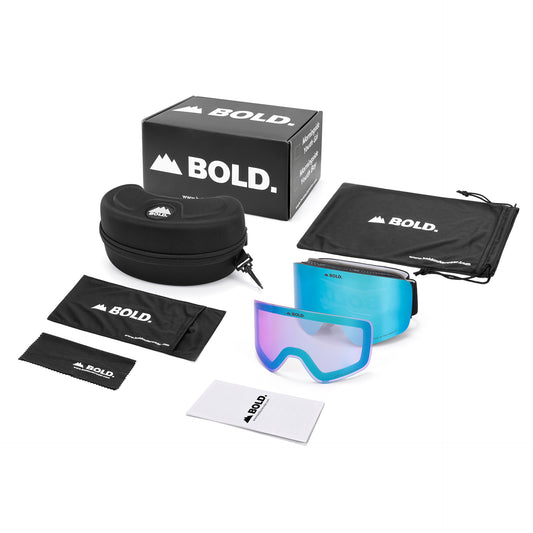
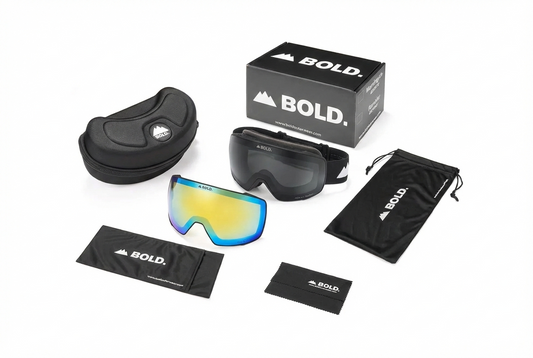
The best ski goggles at any price point are the ones that fit your face and seal properly — fogging and pressure gaps are almost always a fit problem, not a gear problem. BOLD's lineup includes two magnetic lenses, a hard case, and anti-fog coating at a price where most major brands charge significantly more for equivalent performance. Replacement lenses are sold for every BOLD goggle family, so you never have to buy a whole new pair when conditions change or a lens gets scratched.
Are ski goggles with interchangeable lenses worth it?
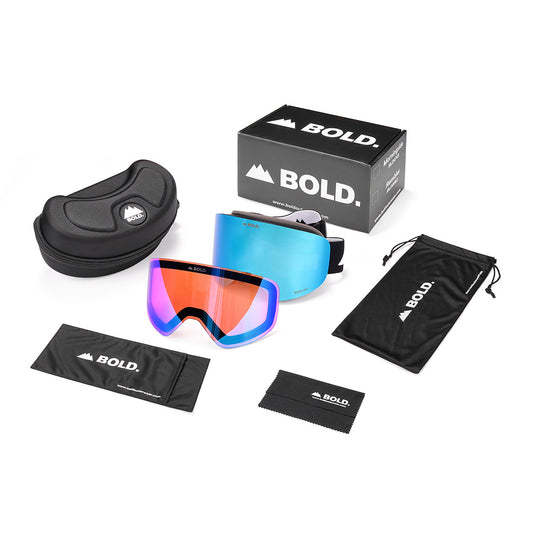
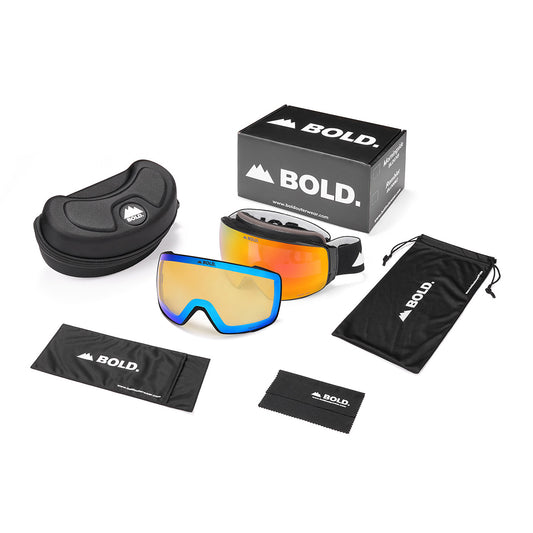
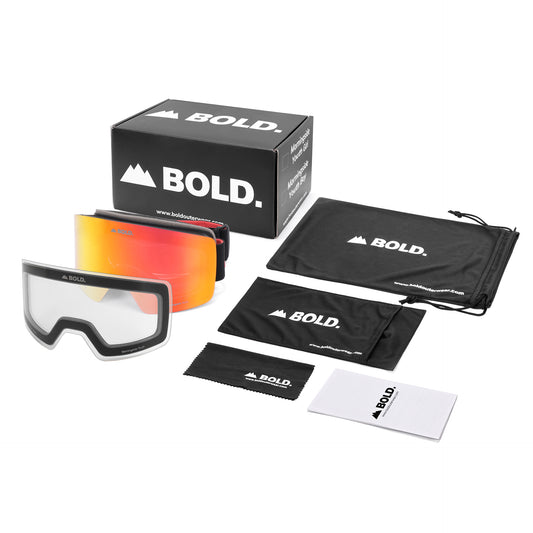
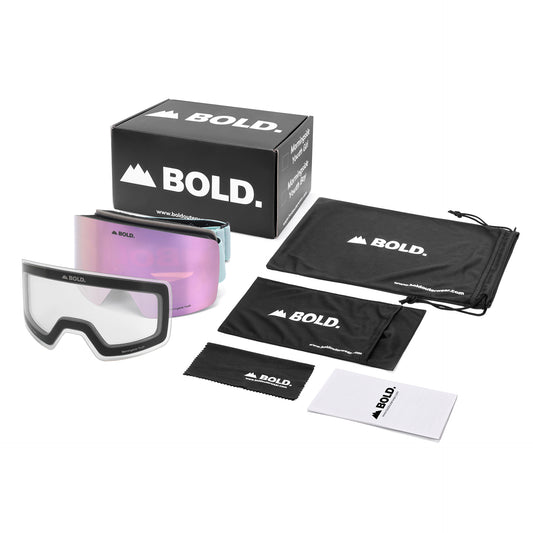
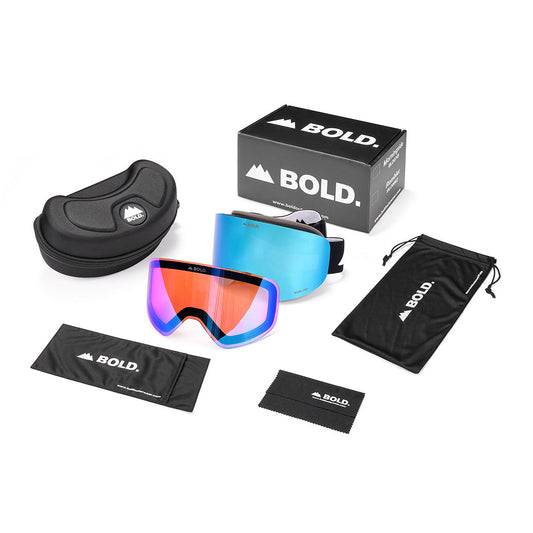
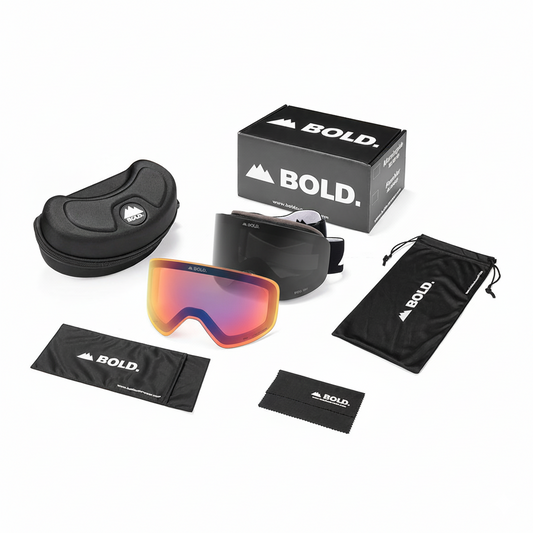
For most skiers, yes. No single fixed lens is ideal from a bluebird morning to a flat-light afternoon, and an interchangeable goggle lets you match the lens to the day. Every BOLD goggle uses a magnetic lens system, and each package comes with two lenses: an everyday lens and a low-light lens. If you'd rather not swap at all, AutoTint adjusts as the light changes.
Do everyday or all-purpose ski goggle lenses really work?
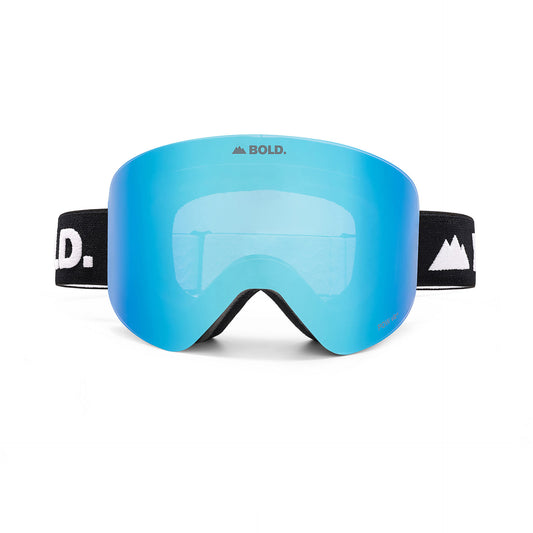
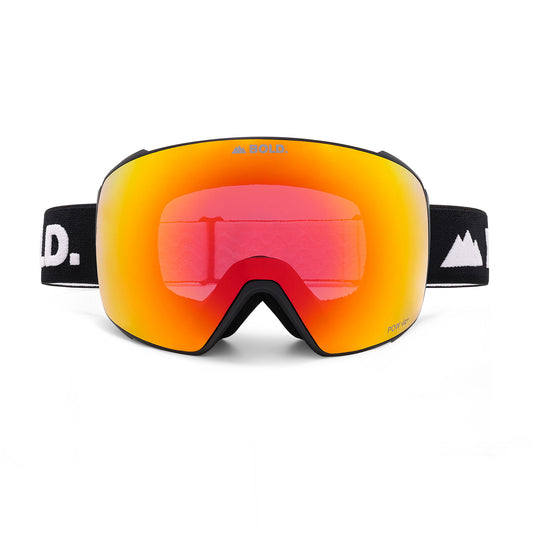
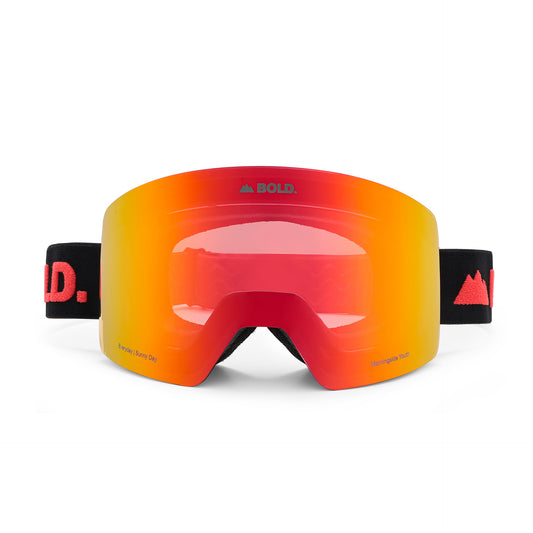
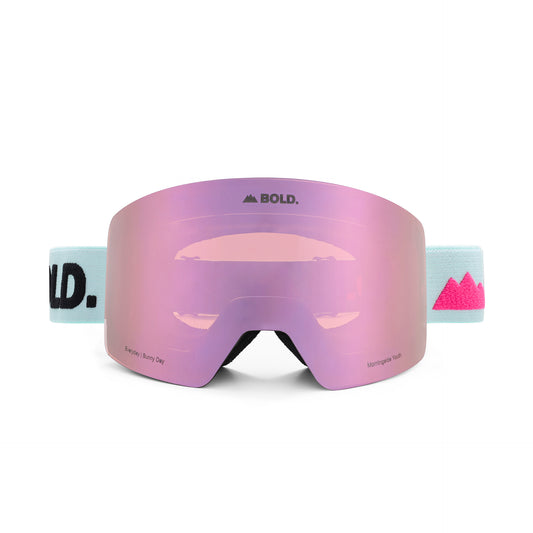
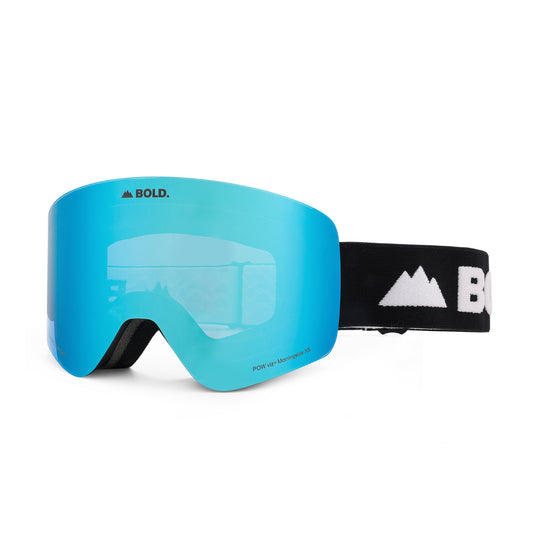
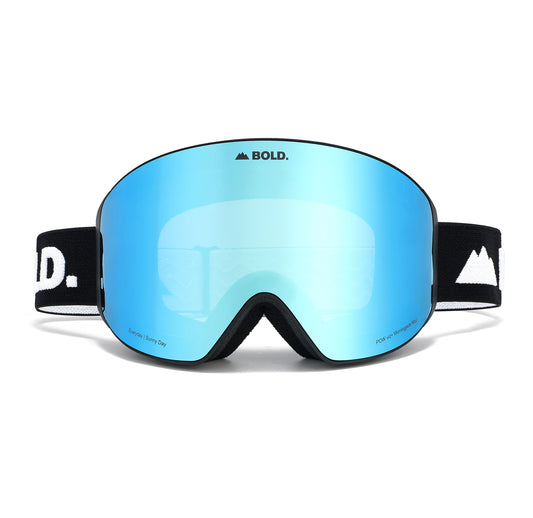
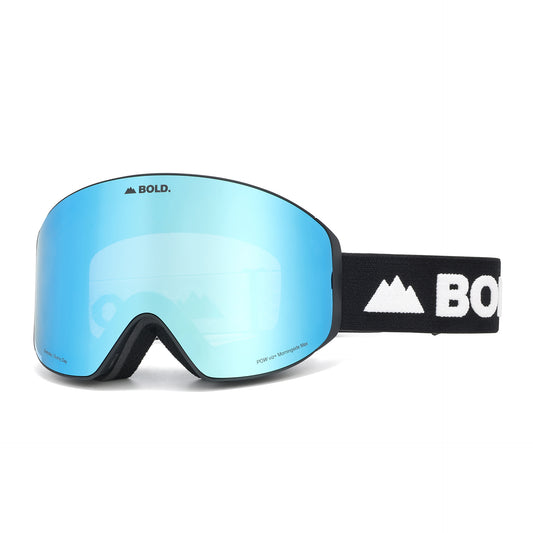
For mixed sun and cloud, yes. Most ski days are a mix, and an everyday lens handles sun without going too dark when it clouds over. Our everyday lenses are Arctic Blue (20% VLT) in the Morningside, XS and Max packages and Crimson Steel (26%) in the Rambler packages. They are a compromise at the extremes: on true flat-light or storm days a higher-VLT lens like Cherry Frost (39%) or Arctic Glow (44%) shows more terrain, which is why every BOLD package includes one as the second lens. See stormy day lenses and sunny day lenses.
Which ski goggle should I get if I'm overwhelmed by the choices?
Start with fit, then the lens. Choose the frame that fits your face: the Morningside for most adults, the Morningside XS for narrower faces, the Rambler for a traditional frame with a little more room side to side, or the Morningside Max for wider faces. Wear glasses? Choose an OTG version. Then choose the lens setup: a standard package gives you an everyday lens and a low-light lens to swap, and AutoTint gives you one lens that adjusts on its own. Our Fit Guide, Morningside vs Rambler comparison and Lens & VLT Guide walk through each choice.
Should I choose AutoTint or a standard two-lens goggle?
Choose AutoTint if you want one lens that adjusts as the light changes, so you don't have to swap. It goes from 83% VLT at its lightest to 20% VLT at its darkest, a medium tint. Choose a standard package if you ski a lot of bright bluebird days: it comes with two lenses, and for the brightest days a Silver (14%) or Black (6%) lens is darker than AutoTint. Both use the same magnetic lens system.
How fast do AutoTint lenses change?
It changes gradually, not instantly. AutoTint reacts to UV, not brightness: it gets darker as the sun gets stronger and lighter again as the light drops. On overcast days there's less UV, so it stays lighter by design. UV-filtering glass, especially car windshields, can reduce the UV that activates the lens, so AutoTint may stay lighter behind glass. More in the AutoTint section of our Lens & VLT Guide.
How secure are the magnetic lenses?
The lens is held by magnets set around the frame: 8 on the Morningside, 7 on the Rambler and 10 on the Morningside Max and Morningside XS. If you ever lose or damage a lens, replacement lenses are sold for every BOLD goggle family, and every BOLD product is covered by a 1-year warranty against manufacturing defects.
Do AutoTint lenses work at night?
AutoTint can be used at night. With very little UV, it stays near its lightest state at 83% VLT, close to our Clear lens at 85%.
Are AutoTint lenses polarized?
No. AutoTint is photochromic, not polarized. It has UV400 protection.
Which replacement lens fits my goggle?
Buy the lens made for your goggle family. OTG, Low Bridge and AutoTint goggles take the same lenses as their base model. Our Which BOLD Ski Goggle Do I Have? guide shows how to identify your goggle and which lenses fit it.