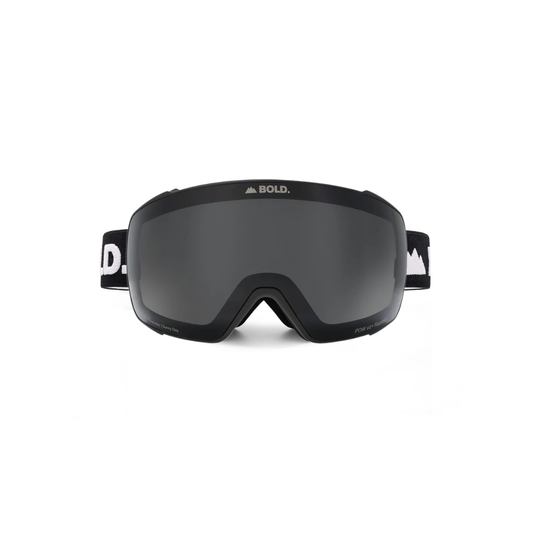
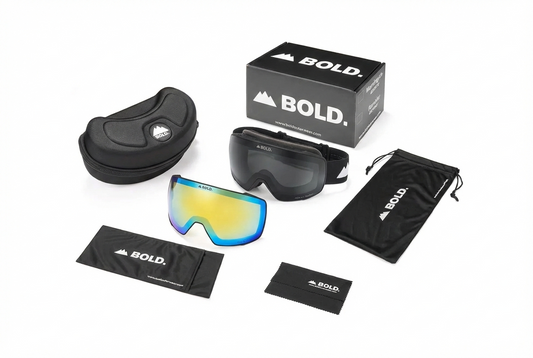
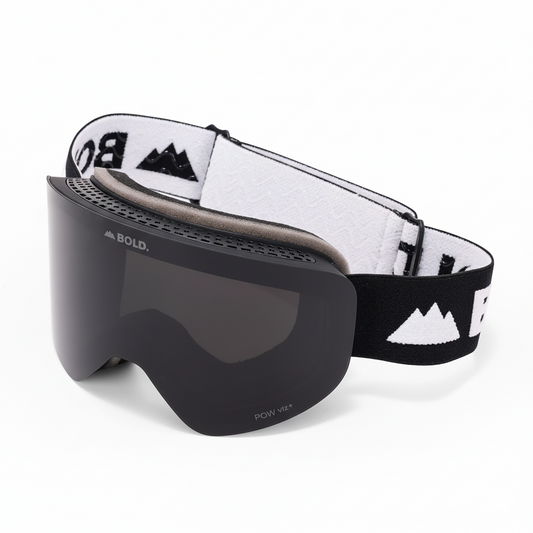
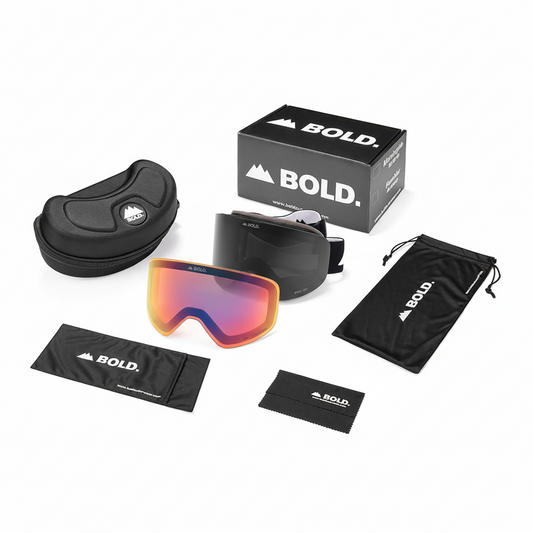
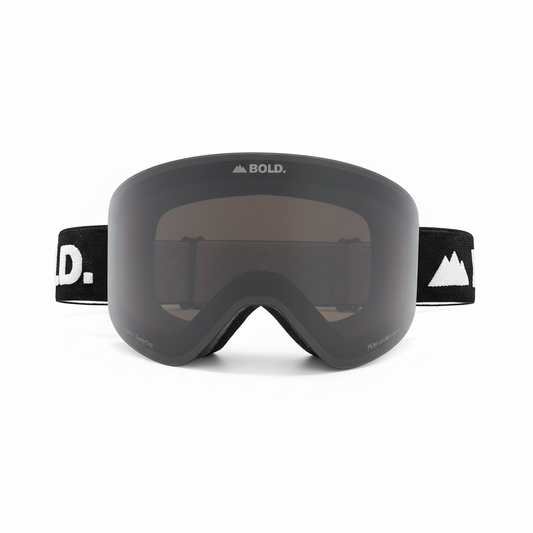
Photochromic ski goggles are the right choice for skiers who spend full days on the mountain across variable terrain and changing weather. If you are regularly moving between open groomers in direct sun and gladed tree runs in deep shade, an auto-tint goggle does the work of two lenses without the interruption of swapping.
They are especially useful for all-day sessions where conditions shift from morning flat light to afternoon bluebird and back, tree skiers and backcountry riders who move quickly between sun and shade, skiers who want a single goggle for their entire quiver without managing spare lenses, and parents who want a low-maintenance setup for their kids.
If you primarily ski in one consistent condition, pure sunny days or night skiing, a fixed-VLT lens optimized for that condition will outperform photochromic at the extremes. But for versatility and simplicity, photochromic wins.
BOLD photochromic ski goggles are available in both the Morningside and Rambler frames. If you are not sure which frame fits your face, check our Ski Goggle Fit Guide or compare the two models on the Morningside vs Rambler page.
How Auto-Tint Ski Goggles Work
Photochromic lenses contain light-sensitive molecules that darken when exposed to UV and bright light, then lighten automatically in shade or low light. This changes the lens's VLT (Visible Light Transmission) — the percentage of light that reaches your eyes. A darker lens (lower VLT) in bright sun reduces glare and eye strain; a lighter lens (higher VLT) in clouds or shade maximizes contrast and depth perception.
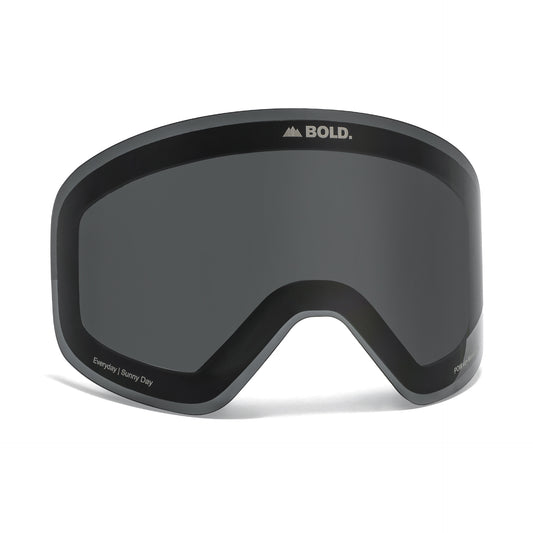
BOLD AutoTint lenses change tint with UV exposure, from about 83% VLT at their lightest to about 20% VLT at their darkest. The result: you see better throughout the entire day without ever pulling off your goggles to swap a lens in freezing temperatures.
Who Should Choose Photochromic?
Auto-tint ski goggles are the right call when:
- Conditions change constantly — you hit sun, clouds, trees, and shade all in one run
- You hate swapping lenses in the cold — gloves, frozen fingers, and lens changes don't mix well
- You ski spring conditions — early mornings are dark; midday is blinding; afternoons are somewhere in between
- You ride dawn to dusk, the lens keeps adjusting with UV as the light changes
- You want to travel light — no extra lens case to pack, no second lens to keep track of
If your mountain sees dramatic light swings throughout the day, photochromic is simply the smarter setup. Learn more in our lens color and VLT guide.
BOLD Auto-Tint Options
BOLD's photochromic lineup is built around the Morningside platform — the same wide-fit goggle worn by competitive skiers and weekend warriors who don't compromise on clarity or performance.
- Morningside AutoTint — Our flagship auto-tint goggle. Photochromic lens, anti-fog performance, magnetic frame system, and OTG-compatible design.
- Morningside Max AutoTint — The wide-frame version for skiers who want maximum peripheral coverage and a roomier fit. Same auto-tint lens technology.
Browse the full lineup in our full ski goggle collection, or explore replacement lenses if you're upgrading an existing BOLD frame.
Frequently Asked Questions
What is a photochromic ski goggle?
A photochromic ski goggle uses a lens that automatically adjusts its tint in response to UV light intensity. In bright sunlight, the lens darkens to reduce glare. In shade, cloud cover, or low light, it lightens to maximize visibility. The tint follows the UV level, without manually swapping lenses.
Do photochromic ski goggles work in all conditions?
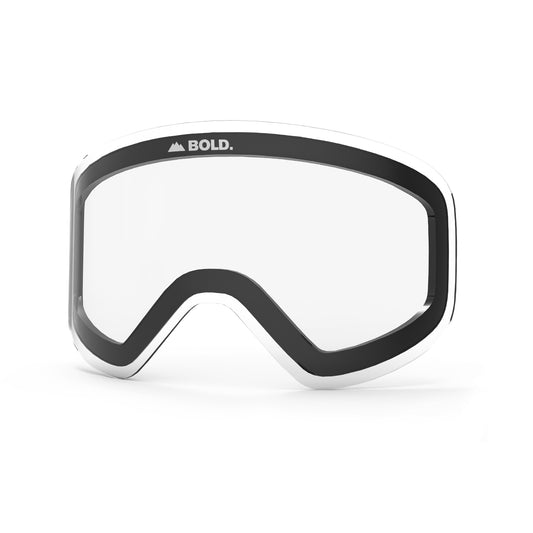
They cover a wide range, not every condition. AutoTint changes tint with UV exposure, from about 83% to about 20% VLT. For the brightest days our Silver (14%) or Black (6%) lens is darker, and for night skiing our clear lens (85% VLT) is the better choice.
How does auto-tint compare to interchangeable lenses?
Interchangeable lens systems (like BOLD's magnetic swap design) let you dial in a fixed tint for predictable conditions. Auto-tint handles variable conditions without any intervention. Many serious skiers use both: an auto-tint goggle for variable days and a fixed-tint backup for days when conditions are consistent. Both approaches are valid — it comes down to how much you want to think about it on the hill.
Ready to simplify your setup? Shop BOLD photochromic ski goggles above and stop worrying about lens swaps.