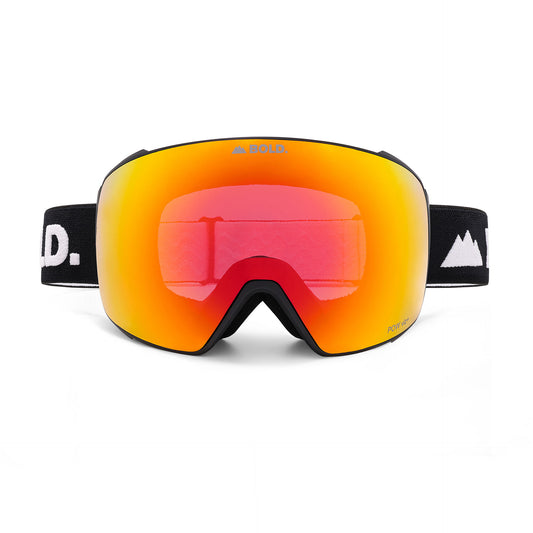
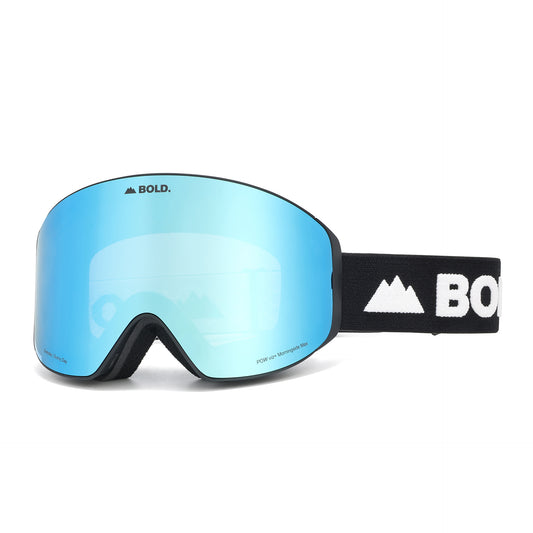
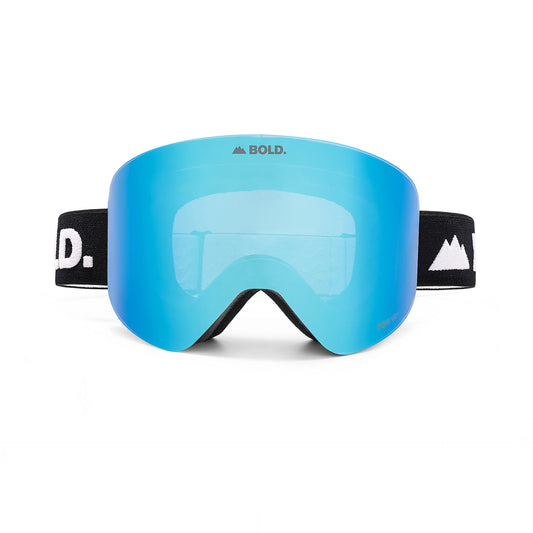
BOLD OTG Ski Goggles
- Morningside OTG — Medium to large face. The most popular OTG option. Deep interior, notched foam temples, full magnetic lens system.
- Morningside Max OTG — Wide fit, near-panoramic field of view. Best for wider faces or anyone who wants maximum coverage with glasses on.
- Rambler OTG — Medium to small face. Slightly narrower and shallower profile than the Morningside. Same OTG foam system.
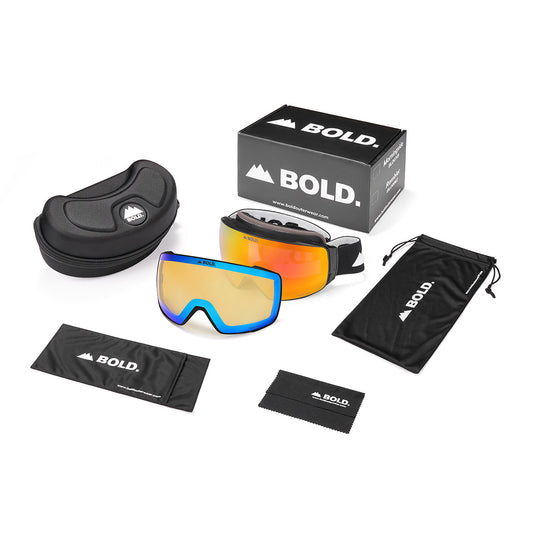
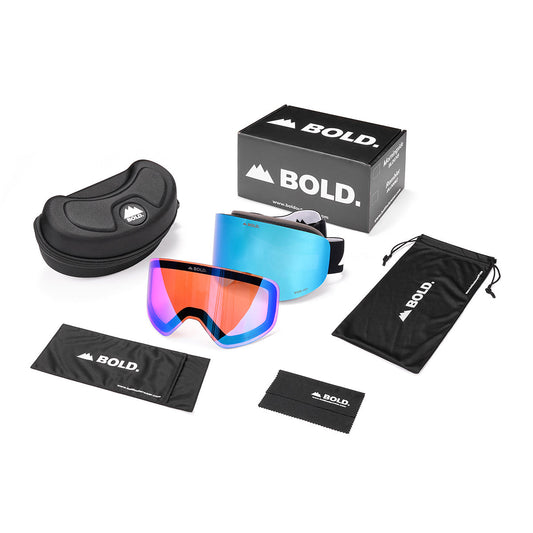
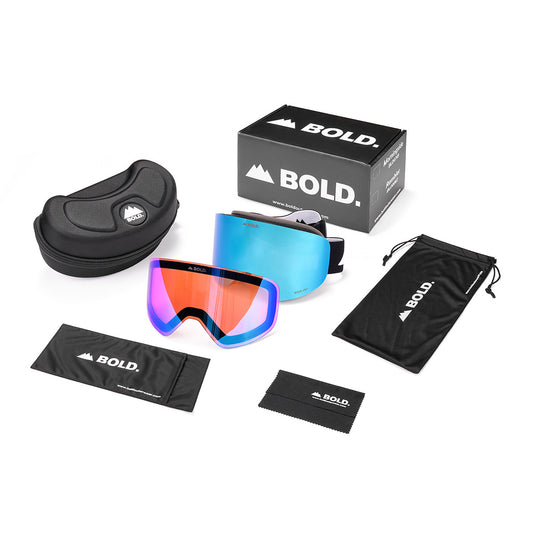
All packages include two magnetic lenses (stormy day + sunny day) and a hard case. Free shipping. 30-day free returns if the fit doesn't work with your frames.
What Makes a Good OTG Ski Goggle
Three things matter most: interior depth (enough clearance so the goggle lens doesn't touch your glasses), temple foam channels (notches that let glasses arms pass through the seal without gaps), and ventilation (OTG goggles run hotter inside because your glasses add a second warm surface — you need real airflow). BOLD OTG goggles address all three. Read the full guide to ski goggles for glasses wearers for fit tips and what to check before buying.
OTG vs Contacts on the Mountain
If you can wear contacts comfortably in cold, dry conditions, that's often the simpler path — any goggle works. But many skiers find contacts uncomfortable at altitude or in wind and cold. OTG goggles are the reliable alternative: no drying, no lost lens worries, and you get to wear your regular prescription. BOLD OTG goggles are designed so that switching between glasses and contacts doesn't mean buying a different goggle — the standard and OTG Morningside use the same magnetic lens system.
Frequently Asked Questions
Will OTG ski goggles fit over any glasses?
Most standard eyeglass frames fit inside OTG goggles, but very wide or thick frames can be tight. Frames with wide temples (arms) are the most likely fit issue. The best test is putting your glasses inside the goggle and checking that the foam seals against your face without pressure on the frame. BOLD's Try Before You Buy program lets you order multiple options and return what doesn't fit — free.
Do OTG ski goggles fog more than regular goggles?
They can, because your glasses add a second warm surface inside. BOLD OTG goggles have top and bottom vents specifically sized to manage the extra thermal load from glasses. A dual-pane lens (standard on all BOLD goggles) also helps by insulating the lens surface from condensation. The main fogging culprit is a poor seal — if the foam doesn't contact your face cleanly around the glasses frames, warm air escapes and re-enters as condensation.
What's the difference between OTG and Asian fit ski goggles?
Different problems. OTG addresses fitting glasses inside the goggle. Asian fit (also called broad fit or low-bridge fit) addresses nose bridge geometry for skiers with lower or flatter nose bridges. Some skiers need both. BOLD makes a separate Rambler Asian Fit goggle for low nose bridge fit.
Can I use photochromic lenses with OTG goggles?
Yes. BOLD OTG goggles use the same magnetic lens mount as standard frames, so all compatible lenses — including AutoTint photochromic — work with OTG versions. Browse replacement lenses compatible with your frame.