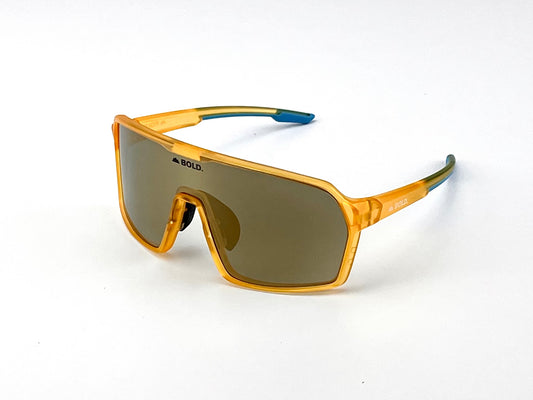
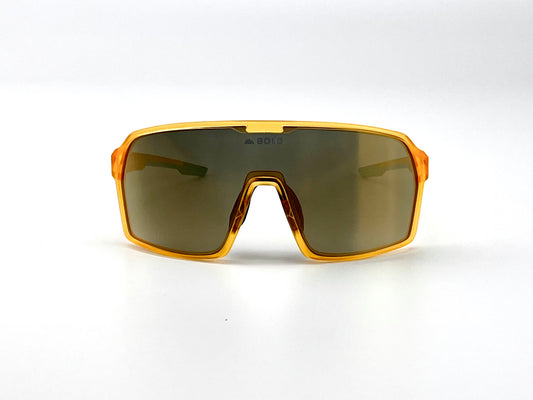
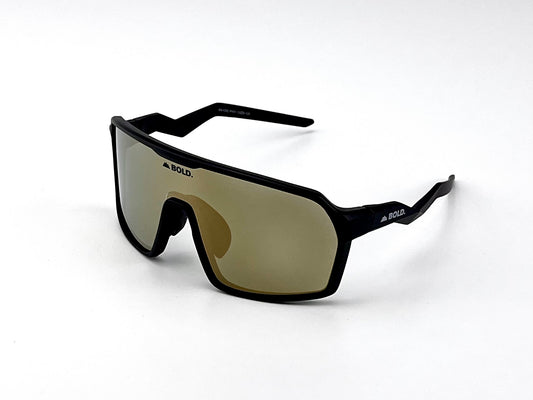
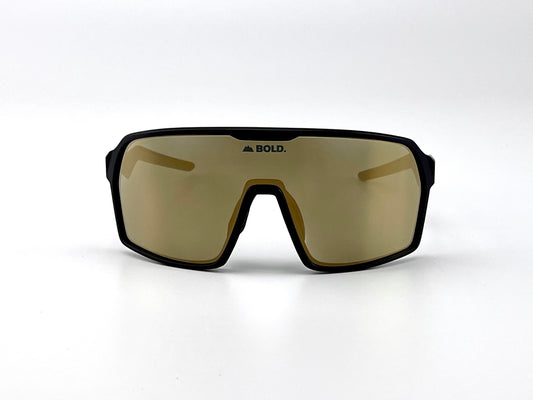
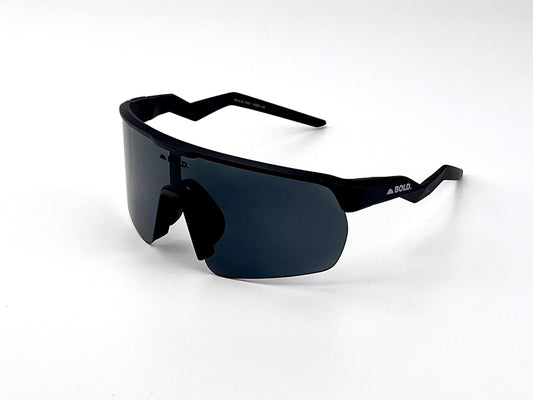
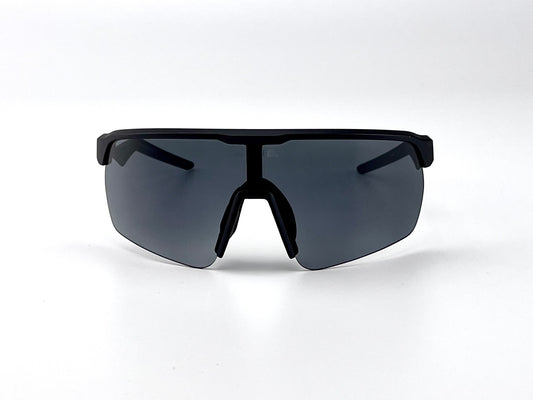
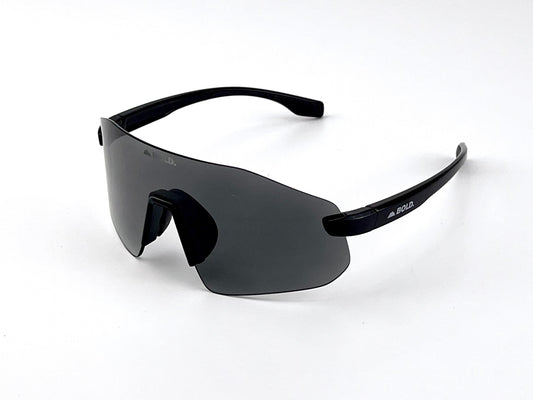
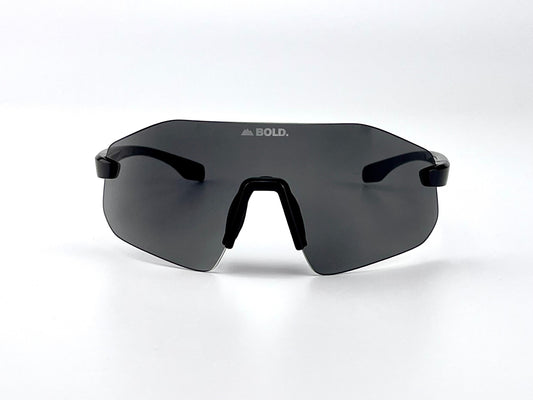
Running Sunglasses

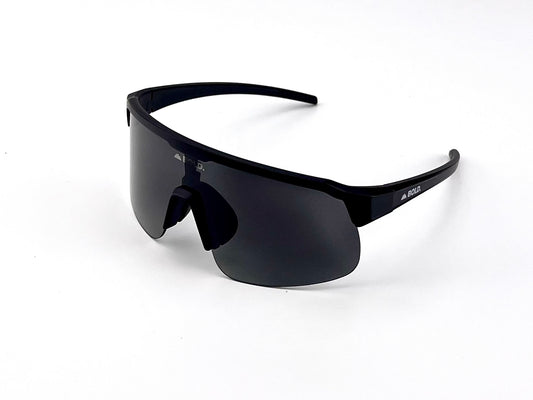
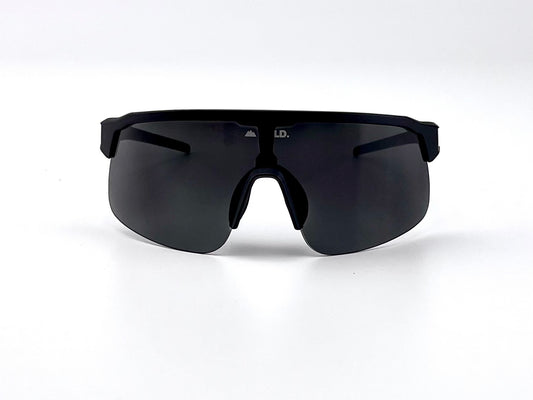
Sunglasses for road and trail running, in fits from narrow to extra wide. Photochromic pairs are lighter in low light and tinted in sun, for a dawn start and a bright finish. Fixed-tint pairs are for runs in full sun.

Find your running sunglasses

Quick picks

Road or trail: photochromic or fixed tint

On the road, the light changes slowly: a pre-dawn start, a sunrise, an exposed midday loop. On trail it changes every few minutes, from open ridge to tree cover and back. If most of your runs mix light and shade, choose a photochromic lens, lighter in low light and tinted in sun. If you mostly run in full sun, a fixed tint is simpler and costs less ($69.99 vs $89.99).

Fit: choose by frame width

Running sunglasses should sit still when you breathe hard and sweat, so choose by frame width, from Bearclaw (narrow, 5.33 in) to Shadows (extra wide, 6.02 in). If lenses sit too tall on your face, NSP pairs a wide 5.87 in frame with a 2.07 in lens height, lower than Bearclaw (2.13 in) or Shadows (2.20 in). Every model here has a one-piece shield lens, so no bridge splits your view. Our guide to sunglasses for your face shape walks through it.

Drift vs Flash for running

Both are photochromic and both take a prescription insert. Drift is our standard fit with a 5.71 in frame. Flash is our wide fit at 5.83 in. If standard frames feel snug at the temples, go to Flash.

Zippy vs Drift for road miles

Both are photochromic and standard fit. Zippy is a rimless shield on a smaller 5.47 in frame and does not take a prescription insert. Drift is 5.71 in and does.

Flux vs Drift for sunny runs

Flux is fixed tint, standard fit, 5.51 in. Drift is photochromic, standard fit, 5.71 in. If you only run in daylight sun, Flux does the job for less; if your runs start before sunrise or go under trees, take Drift.

Every BOLD sunglass: TR90 frame, 1.8 mm polycarbonate lens, UV400, certified to ANSI Z80.3 and ISO 12312-1, drop-ball tested under FDA 21 CFR 801.410, non-polarized. Free U.S. shipping, free 30-day returns, a 1-year warranty, and Try Before You Buy: up to four pairs at home for 10 days.

Running sunglasses FAQ

Why do runners wear sunglasses?

To protect their eyes from UV, to stop squinting on long efforts, and to keep wind, dust and bugs out of their eyes. Every BOLD lens is UV400.

Are photochromic sunglasses good for running in changing light?

Yes, if your runs cross changing light. BOLD photochromic lenses are lighter in low light and tinted in sun. They react to UV light and change gradually, not instantly, so expect a short adjustment when you run from open sun into deep shade. For runs that are always in bright sun, a fixed tint works well.

Should running sunglasses be polarized?

It is a personal choice. All BOLD sunglasses are non-polarized. See polarized vs photochromic sunglasses for the trade-offs.

Do you make women's running sunglasses, or pairs for a narrow face?

Every BOLD sunglass is unisex, so pick by width rather than by a men's or women's label. Bearclaw (fixed tint, narrow fit, 5.33 in) is our narrowest. Zippy and Emerald (both photochromic, standard fit, 5.47 in) are the smaller standard frames.

Can I run in these sunglasses at night?

No. Wear clear or no eyewear in the dark. BOLD sunglasses are designed for daylight.

Can I get prescription running sunglasses?

BOLD sunglasses come with non-prescription lenses. Of the models here, Drift, Glow, Flash and Bearclaw list prescription-insert compatibility on their product pages; the others do not take an insert.


Our running sunglasses, model by model

  • BOLD Zippy (photochromic, standard fit, 5.47 in frame, rimless shield, no prescription insert). A rimless photochromic shield for road miles and 10Ks.
  • BOLD Drift (photochromic, standard fit, 5.71 in frame, takes a prescription insert). The model our sport guides pick most, for runs that start dark and finish bright.
  • BOLD Glow (photochromic, standard fit, 5.71 in frame, takes a prescription insert). Same frame width as Drift, with a different look. Its product page lists running among its uses.
  • BOLD Flash (photochromic, wide fit, 5.83 in frame, takes a prescription insert). Photochromic in our wide fit, listed for trail running.
  • BOLD Wavelength (photochromic, wraparound shield fit, 5.87 in frame, no prescription insert). Wraparound shield coverage for trail runs in mixed light.
  • BOLD NSP (fixed tint, wide fit, 5.87 in frame, 2.07 in lens height, no prescription insert). A lower lens on a wide frame, for runners who find standard frames too tall.
  • BOLD Flux (fixed tint, standard fit, 5.51 in frame, no prescription insert). Fixed tint for sunny road runs; BOLD lists it for trail running and gravel.
  • BOLD Emerald (photochromic, standard fit, 5.47 in frame, rimless lenses, no prescription insert). Rimless photochromic lenses; our trail running guide picks it for forest and mixed-light trails.
  • BOLD Bearclaw (fixed tint, narrow fit, 5.33 in frame, takes a prescription insert). Our narrowest frame, for smaller faces.
  • BOLD Shadows (fixed tint, extra-wide fit, 6.02 in frame, no prescription insert). Our widest frame, for larger faces.

Running guides: best running sunglasses, best sunglasses for trail running and best sunglasses for triathlon. Want to understand the lens first? Read how photochromic sunglasses work. Riding too? See cycling and mountain bike sunglasses, or shop all sport sunglasses.