


Mountain biking is one of the hardest sports to buy sunglasses for. You move between deep shade and direct sun dozens of times per ride. You need a lens that works in the trees and on exposed ridgelines. You need a frame that stays put at speed over rough terrain. And you need coverage that protects your eyes from branches, dust, and roost without fogging up on the climbs.
This guide covers what actually matters in mountain bike sunglasses, when to choose photochromic vs fixed lens, and BOLD's top picks for every trail condition.
What to Look For in Mountain Bike Sunglasses
Lens Type: Photochromic vs Fixed
This is the most important decision for MTB. Trail riding involves constant light changes — shaded switchbacks, exposed ridgelines, dark creek crossings, bright meadow traverses. A fixed-tint lens is always a compromise: either too dark in the trees or too light in the sun.
Photochromic lenses adapt automatically. As UV levels rise in open terrain, the lens darkens. As you drop into the trees, it clears. For trail and enduro riding, photochromic lenses are the clear choice. For XC riders who spend most of their time in consistent conditions, a fixed lens optimized for those conditions also works well. See the full breakdown in our photochromic vs fixed lens guide.

Frame Fit and Retention
MTB involves vibration, impact, and aggressive body positions. A frame that slides down your nose on a steep descent is dangerous. Look for wraparound frames with rubber nose pads and temple tips, a snug fit across the brow, and a profile that works under a helmet visor without the visor catching the frame.
Lens Coverage
More coverage is better on the trail. Larger lenses protect against roost, branches, and wind-driven debris. Wraparound frames reduce the gap between lens edge and face, which matters when rocks and dirt are flying from your front wheel or the rider ahead.
Ventilation
Fogging is a real problem on hard climbs. Look for frames with top and bottom vent channels that move warm air away from the lens. Photochromic lenses are slightly more prone to fogging in cold conditions because the lens surface temperature affects transition, so good ventilation design matters more for photochromic MTB frames.
Transition Speed
For mountain biking specifically, photochromic transition speed matters more than for any other sport. You can go from full sun to deep shade in seconds on a fast trail. Budget photochromic lenses take 2–3 minutes to transition. Quality sport photochromic lenses like BOLD's transition in 20–45 seconds — fast enough to keep up with actual trail conditions.
Best Photochromic Mountain Bike Sunglasses
BOLD's photochromic lineup is built for riders who spend time in mixed light. All models use the same fast-transition auto-tint lens technology with a VLT range calibrated for outdoor sport use.

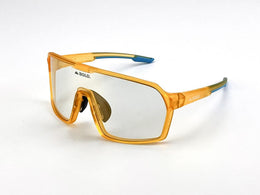
Top pick for MTB. Wraparound frame with wide coverage and secure fit at speed. Fast-transition photochromic lens handles every trail condition.

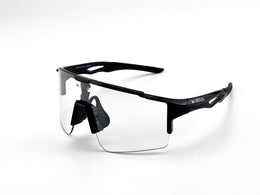
Lightweight semi-rimless frame built for endurance rides. Low weight, minimal interference with a helmet, great peripheral vision.

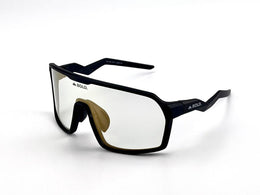
Full-coverage frame with maximum side protection. Strong choice for exposed alpine trails and high-sun descents.

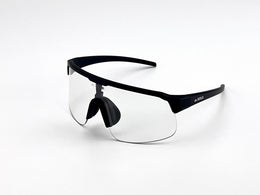
Compact close-fitting sport frame. Stays put on technical terrain and sprint efforts, excellent for cross-country and trail riding.


Aggressive sport styling with full wrap and strong peripheral coverage. Built for riders who want maximum protection and a bold look on the trail.
Shop all BOLD photochromic sunglasses →
Best Fixed Lens Mountain Bike Sunglasses
If you ride primarily in consistent, predictable conditions — long sunny days in the desert, high-alpine trails with little tree cover — a fixed low-VLT mirrored lens often outperforms photochromic in its target environment. BOLD's fixed lens lineup covers high-sun and glare-heavy riding.


Best fixed-lens pick for consistent bluebird conditions. Mirrored low-VLT lens cuts glare on exposed alpine trails and sunny rides.


Wide-coverage sport frame with strong glare protection. A reliable fixed-lens option for riders who know their conditions.
Shop all fixed lens sunglasses →
MTB Sunglasses by Riding Style
| Riding Style | Best Lens Choice | Why |
|---|---|---|
| Trail / All-mountain | Photochromic | Mixed terrain, constant light transitions between trees and open |
| Enduro | Photochromic | Technical descents in variable light; can't stop to swap lenses mid-stage |
| XC / Race | Fixed or photochromic | Consistent loop conditions may suit fixed; photochromic covers everything |
| Downhill | Photochromic | Fast forest descents with rapid light changes; full goggle may also apply |
| Desert / Open terrain | Fixed (low VLT) | Consistent sun and glare; mirrored fixed lens cuts harder |
| Bikepacking / Long days | Photochromic | Conditions change from dawn to dusk over a full day; one lens handles all of it |
FAQ
What are the best sunglasses for mountain biking?
For most trail and enduro riders, the best MTB sunglasses have a wraparound photochromic lens, a snug frame with rubber retention points, and good ventilation to prevent fogging on climbs. Photochromic lenses are the top choice because trail conditions change faster than any fixed tint can accommodate. The BOLD Drift is the top pick — wraparound coverage, fast-transition lens, and a secure fit at speed.
Are photochromic sunglasses good for mountain biking?
Yes — photochromic lenses are the best choice for MTB specifically. Trail riding involves rapid transitions between deep shade and direct sun that a fixed lens can't handle well. Photochromic lenses adjust automatically and continuously, which means you're always riding with the right amount of light transmission without thinking about it. The key spec to check is transition speed — look for 20–45 seconds, not 2+ minutes.
Can you wear regular sunglasses for mountain biking?
You can, but regular fashion sunglasses aren't built for it. They typically lack the wraparound coverage that protects against roost and debris, don't have rubber retention for rough terrain, and usually have inferior optical quality that causes distortion at speed. Sport-specific frames are worth it for anything beyond casual riding.
What lens tint is best for mountain biking?
For mixed trail conditions, photochromic is the answer — no single fixed tint covers everything. If you ride in consistent conditions, amber and brown-base lenses enhance contrast in variable light and perform well in both sunny and partly cloudy conditions. For full sun desert or alpine riding, a low-VLT mirrored lens cuts glare most effectively.
Should MTB sunglasses wrap around?
Yes, for trail and enduro riding. Wraparound frames provide better coverage against flying debris, reduce wind and dust getting behind the lens, and stay more secure on rough terrain. The main exception is XC racers who prioritize minimal weight and maximum ventilation over full coverage.
Do I need a goggle or sunglasses for mountain biking?
Sunglasses work for most trail, enduro, and XC riding. Full goggles are most common for downhill and bike park riding where rocks and roost at high speed create real eye-hazard risk. For everything else, a well-fitted sport sunglass with wraparound coverage provides the right balance of protection, ventilation, and clear vision. See our lens guide for more on how to match lens choice to conditions.
Ready to find the right frame? Browse the full BOLD sunglasses collection or go straight to the photochromic sunglasses for trail-ready auto-tint options.
3 comments
9438i2
3yjjta
y5ta07