


Photochromic sunglasses and fixed-tint sunglasses look nearly identical on the shelf. The difference shows up when you're moving through mixed light — and if you pick the wrong one for how you actually spend your time outside, you'll notice it on every ride, run, or ski day.
Here's a clear breakdown of how photochromic lenses work, when they win, and when a fixed lens is the smarter choice.
How Photochromic Sunglasses Work
Photochromic lenses — sometimes called auto-tint or transition lenses — contain photosensitive molecules embedded in the lens material. These molecules react to UV light: when UV is high (bright sun), they activate and the lens darkens. When UV drops (shade, overcast, indoor), they deactivate and the lens lightens.
The key metric is VLT, or Visible Light Transmission: the percentage of available light that reaches your eyes. For a complete breakdown of VLT ranges and which conditions each serves, see the ski goggle lens color and VLT guide. A photochromic lens might range from 12% VLT in full sun to 60–70% VLT in low light. A fixed lens stays at the same VLT all day.

Transition speed matters, especially for sports. High-quality photochromic lenses transition in 20–45 seconds. Budget lenses can take 2–3 minutes, which means you're riding blind in bright light for a full lap.
One important note: photochromic reaction is driven by UV, not visible light. On cold days, lenses transition slightly slower. Inside a car with UV-blocking glass, they won't darken much even in bright sun. Neither of these matters for outdoor sport use, but it's worth knowing.
Fixed Lens Sunglasses: When They Win
Fixed-tint sunglasses are purpose-built for specific conditions. If you know what you're riding or skiing into, a fixed lens dialed in for those conditions often outperforms photochromic.
- Consistent bright sun: A low-VLT mirrored lens blocks more light and eliminates more glare than a photochromic at its darkest. For a bluebird ski day or a beach volleyball tournament, fixed wins. The Bearclaw and Thunderhead are BOLD's strongest fixed-lens frames for high-sun conditions.
- Polarized performance: Most photochromic lenses are not polarized. Fixed lenses can be. For water sports, fishing, or any activity where reflected glare is the main issue, polarized fixed beats photochromic.
- Cold-weather start: In very cold conditions, photochromic transition slows. A fixed lens performs identically at -20°C as at 20°C.
- Cost: Fixed-tint lenses cost less to manufacture. If you're outfitting a team or buying multiple pairs, fixed lenses are more budget-friendly.
Browse BOLD fixed lens sunglasses →
Photochromic Sunglasses: When They Win
Photochromic lenses earn their price in activities where light changes constantly and you can't stop to swap eyewear.
- Mountain biking in the trees: This is where photochromic lenses shine most clearly. You can go from a shadowed canyon trail to a blasted ridgeline in 30 seconds. A fixed lens is always a compromise — either too dark in shade or too bright in sun. Photochromic lenses track the conditions and you stop thinking about your eyes. See our guide to the best photochromic MTB sunglasses and our ski goggle lens color and VLT guide for a deeper breakdown of how VLT ranges affect visibility.
- Spring skiing and ski touring: Dawn starts in low light that transitions to intense high-alpine UV by midday. A single photochromic lens handles the full range.
- Trail running: Moving between sun-exposed ridges and forested trails, often for hours. Photochromic lenses eliminate the decision entirely.
- Variable weather days: If clouds come and go throughout your ride or race, photochromic adapts continuously without any input from you.
Sport-by-Sport Breakdown
| Sport / Activity | Best Choice | Why |
|---|---|---|
| Mountain biking (trails) | Photochromic | Light changes every few seconds in the trees |
| Road cycling (consistent sun) | Fixed or photochromic | Either works; fixed may be sharper in consistent bright sun |
| Skiing / snowboarding (full day) | Photochromic | Light shifts from morning to afternoon, trees to open runs |
| Bluebird ski day (sunnies over goggle) | Fixed (low VLT) | Consistent bright UV; fixed mirrored lens cuts more glare |
| Trail running | Photochromic | Shade to sun transitions constantly on trail terrain |
| Water sports / fishing | Fixed polarized | Reflected glare calls for polarized; most photochromics aren't |
| Everyday / driving | Either | Photochromic won't darken in car (UV glass); fixed more predictable |
BOLD Photochromic Sunglasses
BOLD's photochromic lineup covers a range of frame shapes for different sports and face types. All use the same auto-tint lens technology built for fast transition in active conditions.

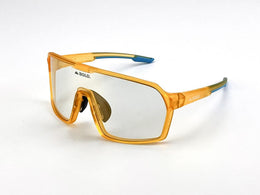
Wraparound performance frame. Top choice for MTB and skiing. Wide coverage, secure fit at speed.

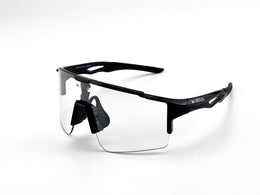
Lightweight semi-rimless frame. Popular for endurance sports, ski touring, and trail running.

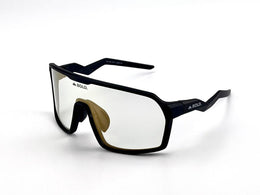
Full-coverage sport frame with maximum side protection. Strong choice for high-UV alpine environments.

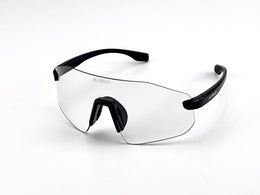
Sport-to-everyday crossover. Goes from the trail to town without looking out of place.

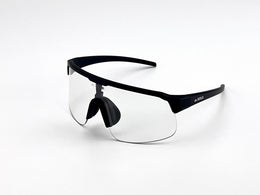
Compact sport frame with a close-fitting wrap. Great for cycling and running.


Bold, aggressive sport styling with full wrap coverage and strong peripheral protection.

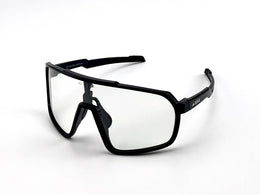
Larger lifestyle-sport frame with photochromic flexibility for all-day outdoor use.
Shop all BOLD photochromic sunglasses →
Also Available: BOLD Photochromic Ski Goggles
If you need photochromic lens technology for skiing and snowboarding, BOLD makes photochromic ski goggles as well. The AutoTint lens in the BOLD photochromic ski goggle lineup uses the same auto-tint technology — darkening in bright alpine sun and clearing in flat light or stormy conditions — with the added protection of a full goggle seal, foam face piece, and anti-fog ventilation system. Every BOLD ski goggle also ships with a second magnetic lens, so you have a backup for any conditions. See our full guide to photochromic ski goggles for a breakdown of how auto-tint lenses perform across conditions.
FAQ
Are photochromic sunglasses worth it?
Yes, for most outdoor athletes — especially mountain bikers, trail runners, and skiers. The convenience of one lens that adapts to all conditions outweighs the added cost in most cases. If you ride or ski primarily in consistent conditions, a fixed lens at a lower price point may make more sense.
How long does it take for photochromic lenses to change?
Quality photochromic lenses transition in 20–45 seconds. Budget lenses can take 2–3 minutes. For sport use where conditions change quickly — especially mountain biking through trees — transition speed is one of the most important specs to check before buying.
Do photochromic sunglasses work on cloudy days?
Yes. UV still penetrates cloud cover significantly — up to 80% on overcast days. Photochromic lenses will still darken somewhat on cloudy days, typically settling at a medium VLT that works well for diffuse light. They lighten more in deep shade or indoors.
Can you get photochromic sunglasses with prescription lenses?
Most photochromic sunglasses can be fitted with prescription lenses by an optician. Alternatively, if you need prescription lenses for outdoor sport, SportRx specializes in prescription sport eyewear and can fit most performance frames including BOLD.
What is the difference between photochromic and transition lenses?
"Transition" is a brand name (Transitions Optical) for a specific type of photochromic lens. All Transitions lenses are photochromic, but not all photochromic lenses are Transitions. The terms are often used interchangeably in casual use. BOLD's auto-tint lenses are photochromic and perform similarly to branded transition lenses in sport applications.
Are photochromic sunglasses good for trail running?
Yes — trail running is one of the best use cases for photochromic sunglasses. Runners constantly move between exposed ridgelines and shaded canyon trails or forest sections. A fixed lens is always either too dark in the trees or too bright in the open. Photochromic lenses track the conditions continuously, which is especially useful on long runs where you don't want to stop and adjust gear.
Do photochromic sunglasses work at night?
No. Photochromic lenses lighten significantly in low light, but they don't reach the full clarity of a clear lens. For night driving or night sports, a dedicated clear lens is safer. Photochromic lenses are designed for daylight use across the full range from shade to direct sun.
Are transition lenses good for sports?
"Transition" is a brand name (Transitions Optical) for a specific photochromic lens. In everyday use, the terms are interchangeable. Sport-specific photochromic lenses — including BOLD's — are optimized for faster transition speeds and a wider VLT range than fashion-oriented Transitions lenses, which matters when you're moving quickly through changing light on a bike or ski run.
What lens tint is best for photochromic sunglasses?
Most photochromic sunglass lenses use a neutral grey or brown base tint. Brown and amber bases improve contrast and perform well in mixed and low-light conditions. Grey bases give more natural color rendition and work better in consistently bright conditions. For mountain biking and skiing, a warm brown or amber base is generally the stronger choice. BOLD's photochromic lenses are calibrated for outdoor sport use across the full range of alpine and trail conditions.
Not sure which BOLD frame fits your face or activity? Browse the full sunglasses collection or compare fixed and photochromic side by side.
1 comment
wa4zp7